
Web Design · 6 min read
How We Built a Storm-Ready Roofing Website, CRM Flow, and Weather Tracking App
A behind-the-scenes look at the Nashville roofing website, lead capture flow, CRM-ready intake, and weather tracking app built for fast storm response.
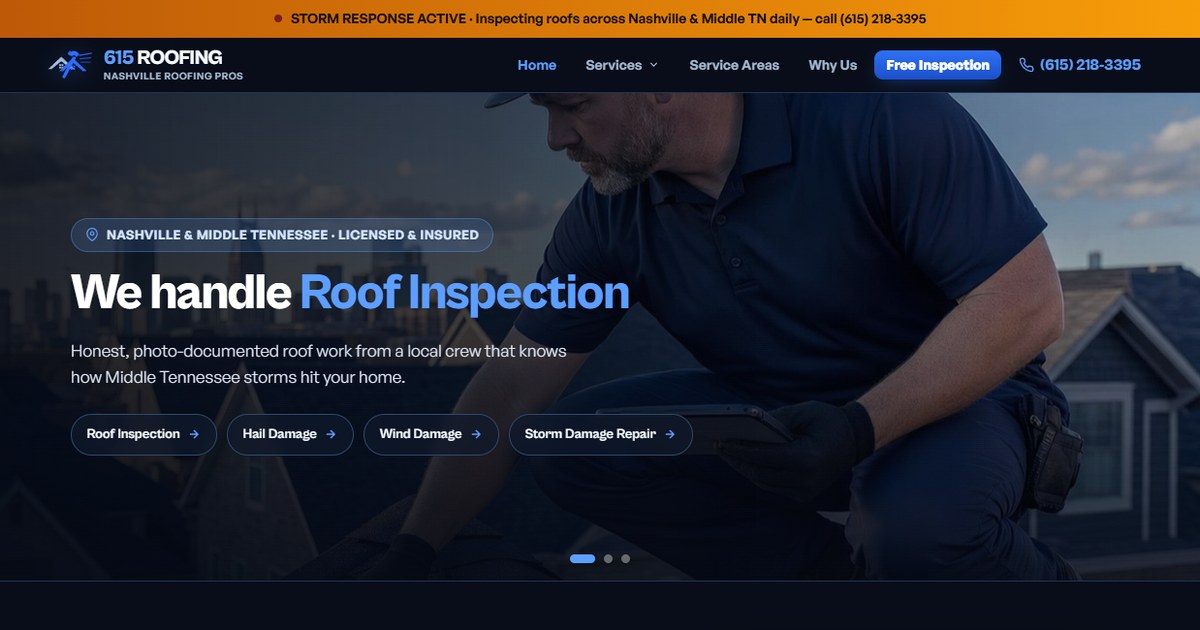
A roofing website has to do more than look good. When a storm hits, homeowners are not casually browsing. They are worried about leaks, missing shingles, hail damage, insurance questions, and whether someone can inspect the roof before the problem gets worse.
That was the strategy behind the Nashville roofing build. The goal was to create a storm-ready website and lead system that could turn urgent homeowner traffic into inspection requests, organize the information for follow-up, and support smarter outreach when roof-damaging weather moves through Middle Tennessee.
Why this roofing website needed a different approach
Most service websites are built like online brochures. They list services, show a few photos, add a contact form, and hope people call. Roofing after a storm is different. The timing matters. The message matters. The form matters. The follow-up speed matters.
For this build, the website was planned around the moments when a homeowner is most likely to take action. That meant the page needed to speak directly to roof inspections, hail damage, wind damage, storm damage repair, and local service coverage without making visitors dig through a complicated menu.
The first impression was built around a strong storm response message, a dark high-contrast design, and clear calls to action. Instead of making the visitor wonder what to do next, the site points them toward scheduling a roof inspection.
The design system: serious, local, and inspection-focused
The visual direction needed to feel strong and trustworthy, not generic. Roofing is a high-ticket service, and homeowners need to feel like the company is organized before they share their information or invite someone to inspect their home.
We used a bold Nashville and Middle Tennessee positioning line, strong blue accents, storm-response language, and a clean inspection flow. The design makes the service feel immediate without looking messy or overly aggressive.
The homepage hero was built to answer three questions fast: where does the company work, what problem does it solve, and what should the visitor do next? That is why the header emphasizes Nashville and Middle Tennessee, licensed and insured messaging, and roof inspection as the primary action.
The CRM-ready inspection form
The form was built around the information a roofing company needs to follow up properly. A basic contact form is not enough when the lead may involve storm damage, scheduling, location, phone follow-up, and service urgency.
The inspection request flow is designed to collect homeowner contact details and send the lead into a system where it can be tracked. The goal is simple: every inspection request should be captured, stored, and ready for follow-up instead of getting lost in email or missed calls.
This is where website design and operations start working together. The page does not just create a nice first impression. It supports a process. A visitor submits the form, the business gets the lead, and the team has the information needed to respond quickly.
The weather tracking app and storm watch workflow
The most important part of this build was not just the website. It was the idea that roofing lead generation can be timed around real weather events.
The weather tracking app and storm watch workflow were designed to monitor roof-damaging conditions, including hail, high winds, severe storms, tornado activity, winter weather, ice, and flooding. When those conditions affect nearby areas, the business can understand where attention may be needed and move faster with inspections, follow-up, and local outreach.
That kind of workflow gives a roofing company a major operational advantage. Instead of waiting for leads at random, the business can pay attention to where demand is likely to appear and prepare its messaging around the neighborhoods and cities most affected.
How the website and CRM flow work together
The website creates the first point of trust. The inspection form captures the opportunity. The CRM-ready structure keeps the lead organized. The weather tracking app helps the business understand when and where demand may increase.
Together, those pieces create a more complete system than a standard roofing website. It is not just design. It is a sales tool, a lead intake tool, and a storm response tool working together.
For a roofing company, that matters because the best opportunities often happen fast. A homeowner may submit a form from their phone after hearing hail, seeing roof damage, or noticing a leak. If that lead is captured clearly and followed up quickly, the business has a better chance of turning urgency into an inspection.
What this project shows about modern web design
This build is a good example of how we approach websites at Exclusive Consulting. A website should look professional, but it also has to support the way the business actually makes money.
For roofing, that means storm timing, local trust, mobile forms, inspection requests, service-area messaging, and fast follow-up. For another industry, the strategy may be completely different. A law firm may need better intake. A medical office may need appointment flow. A med spa may need lead follow-up and consultation booking.
The point is not to build the same website for every business. The point is to understand the business model first, then design the site and systems around the actions that matter most.
Why business owners should care
A lot of business owners think of a website as a finished project. We look at it differently. A strong website should keep working after launch. It should capture leads, support follow-up, reduce missed opportunities, and make the business look more professional every time someone visits.
The Nashville roofing build shows how design, CRM planning, and AI-supported workflow thinking can come together in a practical way. The result is a website that feels modern on the front end and more useful behind the scenes.
If your website is not helping you capture better leads, respond faster, or organize customer information, it may be time to rethink what your website is supposed to do.
View more portfolio case studies or learn how our web design service works.