
Med Spa AI · 6 min read
How Med Spas Can Use AI Without Losing the Human Touch
Learn how Las Vegas med spas can use AI for faster inquiries, booking, follow up, reviews, and safer front desk workflows without replacing staff.
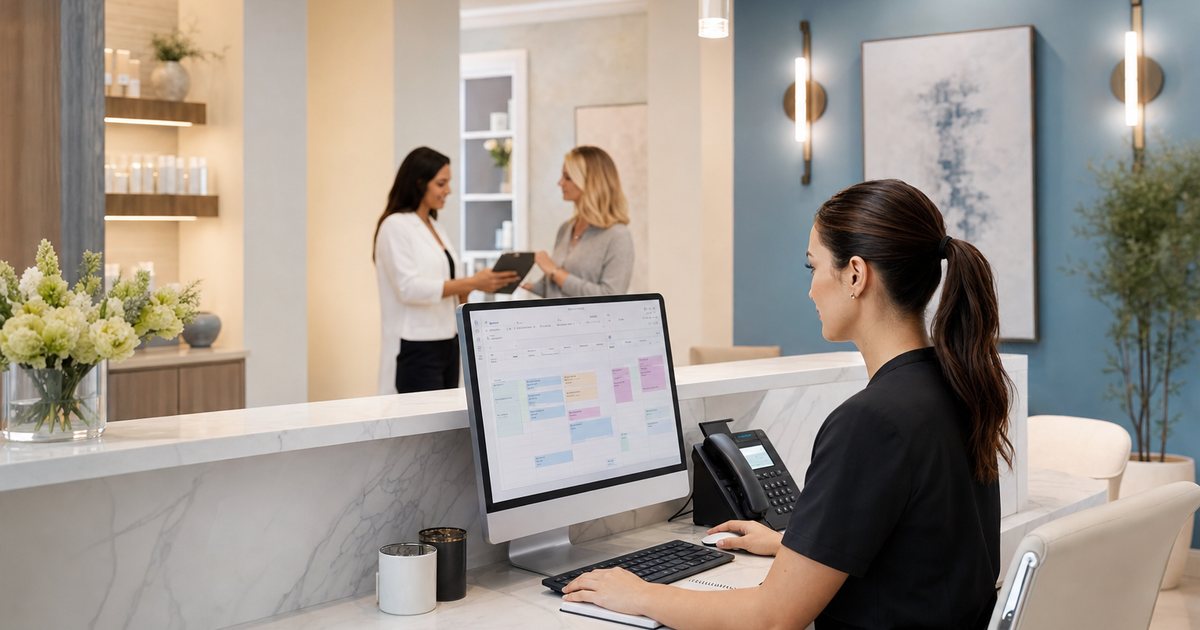
Med spa AI works best when it feels like an organized front desk assistant, not a robot trying to replace your team. For Las Vegas med spas, the biggest opportunities are usually simple: answer new inquiries faster, send booking links at the right time, follow up with leads who went quiet, request reviews after appointments, and keep staff from repeating the same answers all day.
The point is not to remove the human touch that makes clients trust your practice. The point is to give your team a cleaner system so interested clients are acknowledged quickly, questions are routed correctly, and your staff can spend more time with people who need personal attention.
Why med spa AI matters for small teams
Many med spa owners are responsible for treatments, operations, marketing, scheduling, and customer service at the same time. The American Med Spa Association describes AI as a practical tool for small medical spa practices because it can support repetitive administrative and communication tasks without replacing medical professionals or clinical judgment, which is exactly how a safe med spa workflow should be framed (American Med Spa Association).
That distinction matters. AI should not diagnose, recommend treatment plans, promise outcomes, or answer questions that require a licensed provider. It can, however, help with the front end of the client journey. A well designed assistant can acknowledge an inquiry, collect basic context, share general service information, provide a booking link, and flag anything that needs a human follow up.
Start with the front desk, not the most complicated automation
The best first med spa AI project is usually not a complicated all in one system. It is a narrow workflow that solves a real daily problem. For many practices, that starts with missed calls, website forms, Instagram messages, and appointment questions.
A practical workflow might look like this:
- A potential client fills out a website form or asks a question through chat.
- The inquiry is saved into a CRM with the person’s name, phone number, email, city, service interest, and notes.
- The AI assistant sends a quick, professional response that confirms the request was received.
- The system offers a booking link or routes the lead to the right staff member.
- If the lead does not book, the system sends a polite follow up later.
This type of setup gives the med spa a faster response time without asking staff to watch every channel all day. It also creates a record of every lead, which makes marketing easier to measure.
Where AI can help a med spa right away
A med spa does not need to automate everything to see value. The strongest early use cases are usually the ones that remove repetitive work and protect revenue that already exists in the business.
Inquiry response
AI can answer common questions about hours, location, general service categories, consultation options, parking, financing links, and how to book. The assistant should be trained to stay inside approved language and send clinical or treatment specific questions to a human.
Lead follow up
Many leads do not book on the first touch. A simple follow up sequence can remind interested clients to schedule, ask whether they still need help, and keep the practice from losing people who were ready to buy but got distracted.
Review requests
After a completed appointment, automation can send a review request at the right time. It can also alert the team when a client has a concern, so the business has a chance to respond professionally before the issue turns into a public reputation problem.
CRM tracking
When every form, chat, and call source feeds into one CRM, the owner can see where leads are coming from and which services are getting the most interest. This helps avoid guessing when deciding what to promote next.
Staff support
AI can help draft internal notes, summarize lead conversations, prepare follow up messages, and keep standard answers consistent. Staff still controls the relationship, but the system reduces typing, searching, and repeated explanations.
Keep privacy and compliance in the plan
Med spas need to be careful with forms, chat tools, analytics, booking pages, and advertising pixels. HHS explains that tracking technologies can include cookies, pixels, session replay tools, and scripts that gather information about website or app users, and healthcare regulated entities must evaluate how those tools handle protected information (HHS Office for Civil Rights).
This is why AI implementation should include a privacy aware workflow review. A med spa should know what information is being collected, where it is stored, which vendors touch it, whether a business associate agreement is needed, and which tools should avoid sensitive details entirely. This blog is not legal advice, but it is a reminder that secure workflow planning should happen before adding more tracking and automation tools.
Marketing claims should stay professional and supportable
AI can help write drafts, organize campaigns, and keep follow up consistent, but med spas should not use it to create exaggerated treatment claims. The FTC says companies must support advertising claims with solid proof, especially when health related products or services are involved (Federal Trade Commission).
For a med spa, that means AI generated content should be reviewed before publishing. Avoid promises about outcomes, avoid fake reviews, and avoid language that makes a service sound guaranteed. The stronger approach is to use AI for speed and consistency while keeping final approval with the owner or trained staff.
How Exclusive AI Consulting can help
Exclusive AI Consulting helps Las Vegas med spas audit the client journey before adding tools. We look at missed calls, form routing, booking friction, review requests, CRM tracking, chatbot behavior, and follow up timing. Then we recommend the first workflow that is most likely to save time or recover lost opportunities.
For many practices, that first workflow is a simple intake and follow up system. It can capture the lead, ask qualifying questions, send alerts to the team, and help the client take the next step. From there, the system can expand into review growth, AI search visibility, content support, and operational reporting.
If your med spa is getting inquiries but your team is too busy to respond quickly, the next step is not to chase every AI tool on the market. The next step is to map the workflow, protect the client experience, and build one useful system that your staff can actually use.